Posted: September 01, 2026
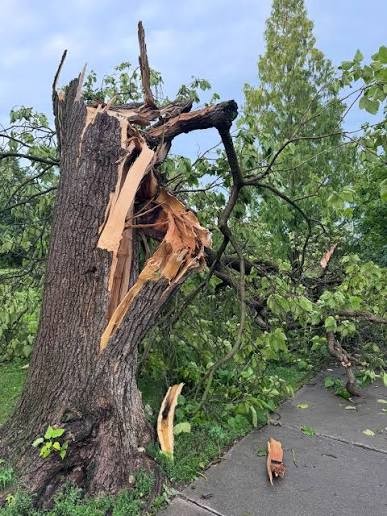
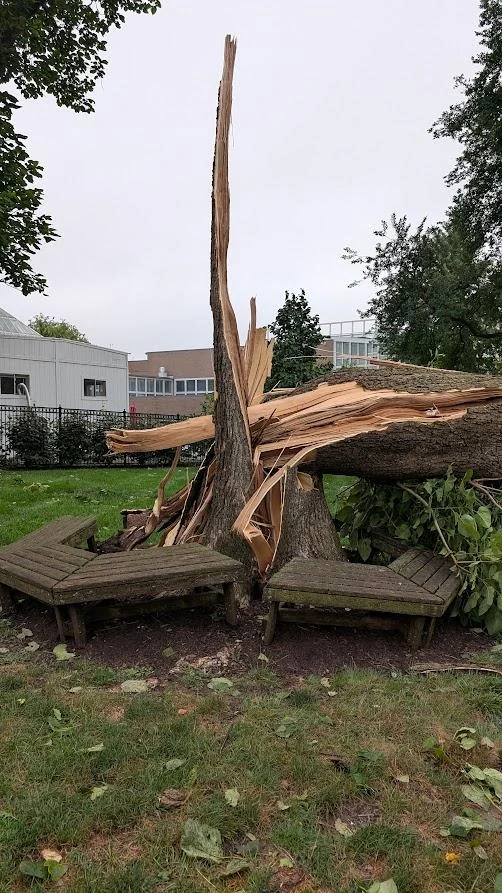
A few weeks ago, in the aftermath of the severe August storms, we went out to our community plots to find broken beebalms, tangled cucamelons, and nasturtium flowers blown away. After such record-breaking storm damage, you may have noticed some of the same in your own garden!
While gardens are innately resilient (wind encourages deep root systems, and rain thickens stems), the damage can get out of hand when infrastructure is toppled or standing water creates waterlogged soil, stripping nutrients and collapsing air pockets.
Growing to Green’s mission is to link urban growers with the resources they need to sustain their gardens, especially in these moments of unexpected setbacks and tumultuous weather.
Our team recently visited the Franklin Soil and Water Conservation District, the state subdivision that oversees maintenance of our soil and water resources. They introduced some of the projects they’ve undertaken to fortify central Ohio against stormwater damage, sharing that the newest development in stormwater management is green infrastructure.
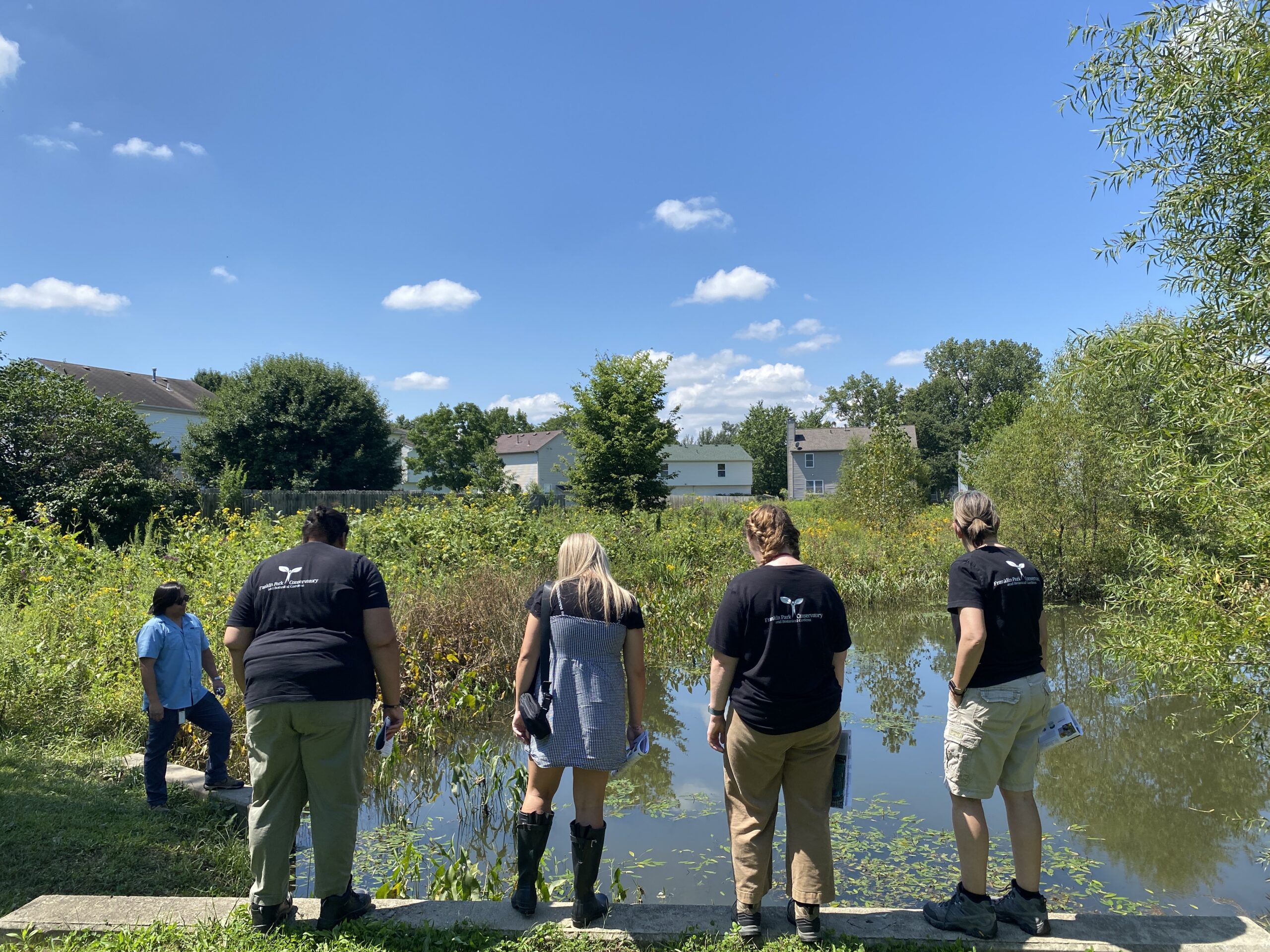
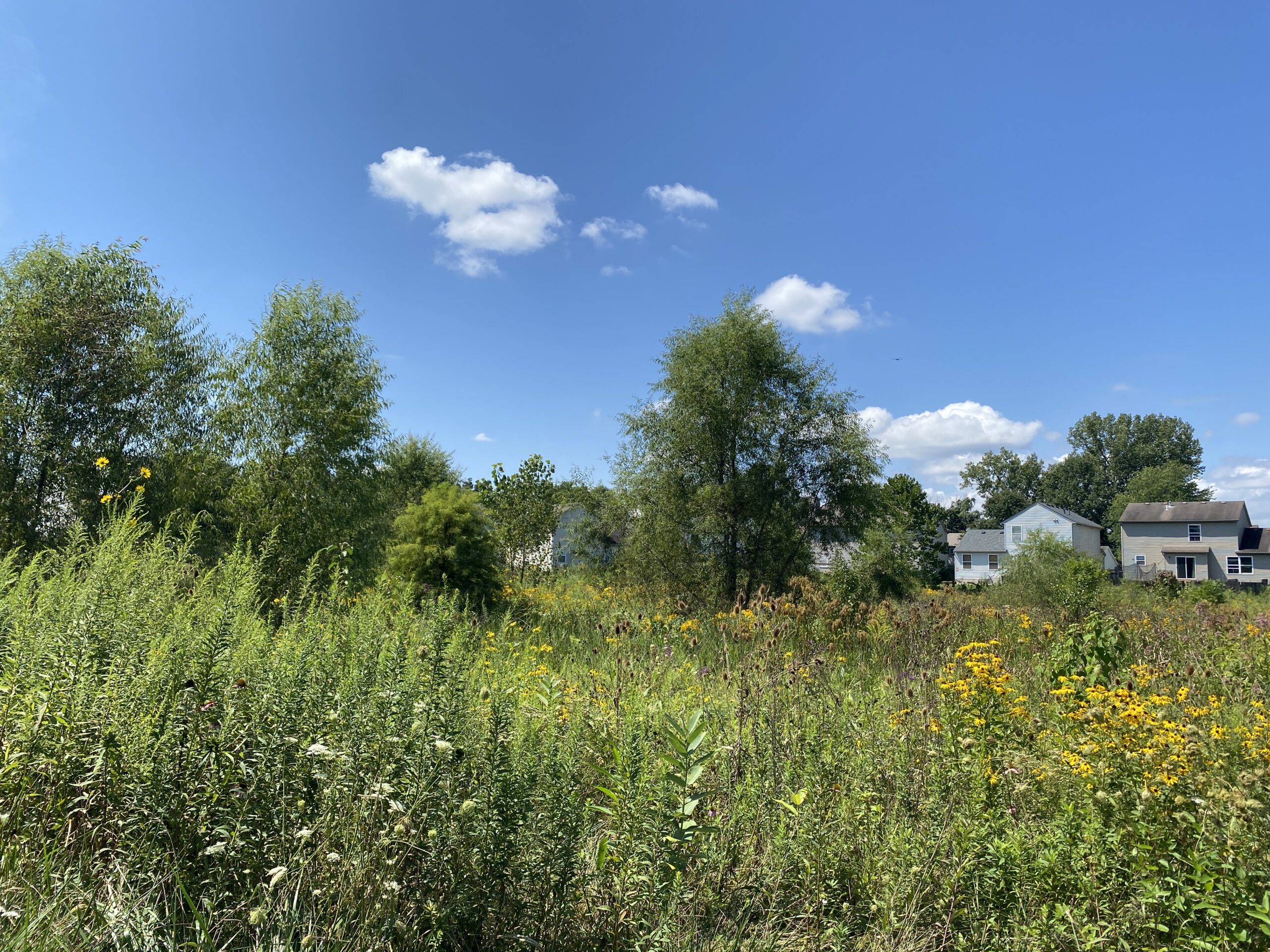
Green infrastructure is an umbrella term for many eco-friendly building solutions, from rain gardens to rainwater harvesting to permeable pavements. Pictured above is a restored stormwater drainage basin in Blacklick, Ohio. It was planted ten years ago, and what was once a barren storm basin now flourishes with black-eyed susans, purple coneflower, redbuds, and fragrant sumac. These filter the heavy stormwater, fix soil and nutrients, and usher in native pollinators and wildlife.
When planting your own garden, a sturdy perennial, such as swamp milkweed or cardinal flower, helps to stabilize soil and retain water. Native restoration also saves money in the long run by reducing costs in labor, repairs, and hard infrastructure.
Through the Community Backyards Program at FSWCD, you can receive a rebate voucher toward a rain barrel by taking a stormwater class. You can also receive a rebate for a compost bin through the same program (compost acts as a natural sponge for rainwater!). FSWCD is also a great place to seek grants for urban agriculture.
Though a native perennial, rain barrel, and compost bin can’t prevent an uprooted vegetable or a storm-snapped flower, they certainly can build a more resilient local food and garden system in the face of an increasingly extreme environment.
Learn more about the Community Backyards Program here and more about the Franklin Soil and Water Conservation District here.