Posted: October 20, 2026
The season of crunchy leaves, crisp air, and shorter days is upon us, and as fall settles in and our summer gardens expire, the season’s change offers boundless opportunities for a refreshed compost bin! In the fall, your primary composting goals should be to make the most of abundant fallen leaves and begin insulating your pile for winter.
As per Growing to Green’s Composting 101 guide, an ideal compost consists of alternating layers of carbon-rich browns and nitrogen-rich greens, most preferably in a 3:1 carbon to nitrogen ratio for happy microbes and worms. Your compost should always start and finish with a generous layer of coarse brown materials—sticks, straw, wood chips, dry leaves—with nitrogen-rich greens sandwiched between (think garden cleanup scraps or post-Halloween jack-o’-lanterns).
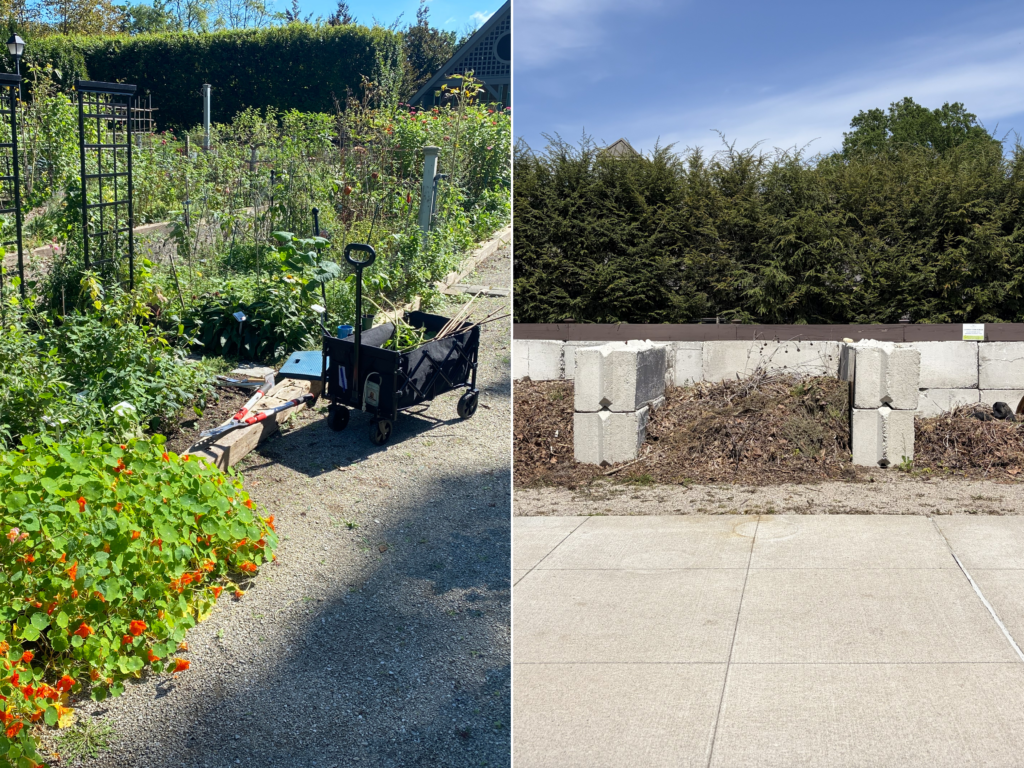
(1) Preparing to take down expired summer crops and replant cold weather varieties for the fall season. (2) Photo of the three-part composting system implemented at the Franklin Park Conservatory community gardens.
In the fall, the garden sees a lot of changes. Perhaps that’s clearing out frost-sensitive peppers and eggplants or introducing resilient cool-weather crops, like hardy brassicas, swelling rutabagas, and root veg. In preparation for October’s seasonal changes, the Growing to Green team planted hybrid carrots, red meat radishes, and turnips in our community plot, and repurposed the basil, snapdragons, and tomato vines on their last legs as green nitrogen layers of compost.
For your browns, fallen deciduous leaves will make for a perfect carbon blanket to tuck your compost in. You can shred and collect large quantities of fall leaves, storing them in breathable bags or a separate bin for year-round use. Using thick layers of these leaves will help to buffer against the cold as temperatures drop.
Our final tip: make sure your compost pile remains enclosed or covered with a tarp to avoid being waterlogged by fall rains, especially in this particularly rainy year. A wet compost can produce unpleasant odors and is too oxygen-deficient to support microorganisms. If your pile does accumulate some excess moisture, you can treat it by turning your compost and adding more absorbent brown leaves.
A compost-enriched soil will energize your garden, benefiting nutrient availability and disease resistance, and a little extra attention in the fall will make for a smoother overwintering for your compost pile. As temperatures drop to winter lows, the microbial activity in your compost bin will slow (even halt), but consistent effort, input, and balance will ensure a self-sustaining compost throughout all seasons.
Happy composting!